Governmental Policy Levers: Navigating Drug Pricing Across Agencies and Congress – FDA Watch
In this first part of our series in collaboration with White & Case and BRG, Wayne chats with Bethany Hills, Partner at White & Case’s New York office; Rahul Rao, Partner in White & Case’s Washington, D.C., office; and John Barkett, Managing Director in BRG’s Healthcare Transactions and Strategy practice. Together, they discuss FDA and product-strategy decisions that actually determine future pricing power developments; how certain factors shape market structure in ways that could attract anti-trust scrutiny; the line between lawful regulatory strategy and conduct that regulators or plaintiffs may characterize as competition-distorting; how management teams should think about government policy and product strategy differently amid intense price pressure; recurring fact patterns where companies unintentionally create anti-trust or stroke-of-the-pen risk; how recent political efforts around drug pricing may be tied to regulatory strategies from manufacturers; how competition authorities and deal-makers now assess FDA-derived barriers to entry in pharma and biotech; “pricing power risk” at the development stage; developments in DTC advertising; and much more.
This episode and the rest of our series do not include the usual Headlines and Resources Links segments.
About Our Guests
Bethany Hills

Bethany Hills is a regulatory partner whose practice integrates life sciences product regulation, healthcare compliance, corporate governance, enforcement risk management and cross-border transactional strategy. She advises global life sciences, healthcare and technology companies, investors and innovation platforms on complex regulatory challenges that span product development, commercial execution, enterprise compliance and enforcement readiness.
Bethany’s practice encompasses the full scope of U.S. regulatory frameworks affecting FDA-regulated products — including drugs, biologics, medical devices, diagnostics, digital health technologies, cosmetics, food and tobacco products — as well as the healthcare regulatory regimes governing reimbursement, provider operations, telemedicine, pharmacy regulation, laboratory oversight, DEA compliance and privacy. She combines deep subject-matter expertise with an operational understanding of how regulatory and compliance risk influences corporate strategy, capital deployment and global expansion.
One of the core components of Bethany’s practice is structuring and negotiating regulatory provisions in complex commercial arrangements across the life sciences supply chain. She advises on and drafts regulatory and quality frameworks embedded in manufacturing and supply agreements, CDMO arrangements, distribution and commercialization agreements, pharmacovigilance and safety data exchange agreements, quality and technical agreements, licensing and collaboration agreements, co-promotion and services agreements, and cross-border commercialization structures. Her work addresses regulatory responsibility allocation, GMP and quality system obligations, inspection risk, adverse event reporting, recall coordination, labeling control, promotional compliance, data governance and audit rights. She ensures that contractual frameworks align with FDA expectations and mitigate downstream enforcement exposure.
Bethany regularly supports sophisticated corporate initiatives, including public and private M&A transactions, cross-border investments, carve-outs, joint ventures and strategic alliances. She leads regulatory due diligence, structures risk allocation and compliance covenants, evaluates regulatory representations and warranties, and advises on post-closing integration of quality systems and compliance programs. Her regulatory assessments frequently inform valuation assumptions, indemnity architecture and closing conditions in high-stakes transactions.
She represents clients in government investigations, enforcement actions and high-stakes litigation matters involving FDA, DOJ, HHS-OIG, CMS and state authorities, including matters arising under the False Claims Act, FDCA, Anti-Kickback Statute, civil monetary penalty authorities, quality system regulations and promotional oversight rules. Her work frequently involves issues at the intersection of regulatory compliance and reimbursement, including government price reporting, drug pricing and market access strategy, Medicare and Medicaid coverage and payment integrity, value-based arrangements, and commercial and government reimbursement risk. She advises on enforcement exposure associated with pricing practices, reimbursement submissions, promotional claims, patient support programs and contracting structures. Her healthcare compliance counseling includes the design and operationalization of enterprise compliance programs, pricing and reimbursement controls, internal investigations, board reporting frameworks and remediation strategies.
A distinctive element of Bethany’s practice is her leadership in artificial intelligence governance and regulatory strategy within life sciences and healthcare. She advises companies developing AI-enabled products as well as enterprises deploying AI tools in research, manufacturing, pharmacovigilance, commercial analytics and care delivery. Her work addresses regulatory classification, evidence generation strategies, algorithm governance, cybersecurity, data integrity, global AI regulatory developments and associated enforcement risk.
Bethany is a frequent speaker and author on FDA enforcement trends, healthcare fraud risk, AI governance and product regulatory strategy. Bethany serves on the Law360 Life Sciences Editorial Board, the Artificial Intelligence in Precision Oncology Editorial Board, and is a Board Director for Drugs for Neglected Diseases (DNDi) North America. She mentors founders and innovators through service on both the Women’s Health and HealthTech Councils for Springboard Enterprises and the New York Biodefense Commercialization Fund. Her practice is defined by the integration of product regulation and healthcare compliance with corporate and commercial execution — enabling clients to innovate, transact and operate globally within complex regulatory environments.
Rahul Rao

Rahul Rao brings extensive experience in antitrust enforcement, litigation, and policy. He served as Deputy Director of the Federal Trade Commission’s Bureau of Competition from 2022 to 2025 and Managing Assistant Attorney General in the Antitrust Division of the Washington State Attorney General’s Office from 2018 to 2022.
He draws on this background to help clients navigate high-stakes competition matters, including federal and state government antitrust investigations and litigation defense, private antitrust and complex commercial litigation, merger clearance and internal investigations.
While at the FTC, Rahul led investigatory and litigation strategy across multiple enforcement divisions, including those focused on retail, labor, consumer goods, private equity, healthcare, pharmaceuticals, and biotech. He oversaw teams responsible for several high-profile merger challenges, including matters involving horizontal overlaps, vertical foreclosure, portfolio leveraging, and acquisitions by private equity sponsors.
He also played a leadership role in conduct investigations into competition issues in the pharmaceutical distribution system, rebating practices, price discrimination, and restrictions on independent repair.
Rahul was a key contributor to major FTC policy initiatives, including the 2023 Merger Guidelines, 2025 Hart-Scott-Rodino (HSR) rule changes, and Section 5 enforcement. His work helped shape the FTC’s approach to merger remedies, litigating the fix, and enforcement priorities in evolving markets such as AI and digital platforms. He also represented the FTC in White House-led competition policy efforts and engagements with international and state-level antitrust authorities.
Rahul helped establish the Washington State Office of the Attorney General as a leading state antitrust enforcer. He spearheaded Washington State’s nation-leading No-Poach Initiative and served as senior litigator on several litigations. His experience gives him unique insight into the increasing role of state attorneys general in competition enforcement.
From 2005-2006, Rahul served as a law clerk for the Honorable Eric T. Washington, the then-Chief Judge of the District of Columbia Court of Appeals.
In private practice, Rahul advises clients on merger clearance, government investigations, and compliance strategies, helping them anticipate regulatory scrutiny and mitigate enforcement risks.
A recognized thought leader in antitrust enforcement and competition policy, Rahul has delivered keynote addresses, testified before Congress, and spoken at major industry forums, including the ABA Antitrust Law Spring Meeting, Financial Times Live, and conferences on healthcare, technology, and labor markets.
John Barkett
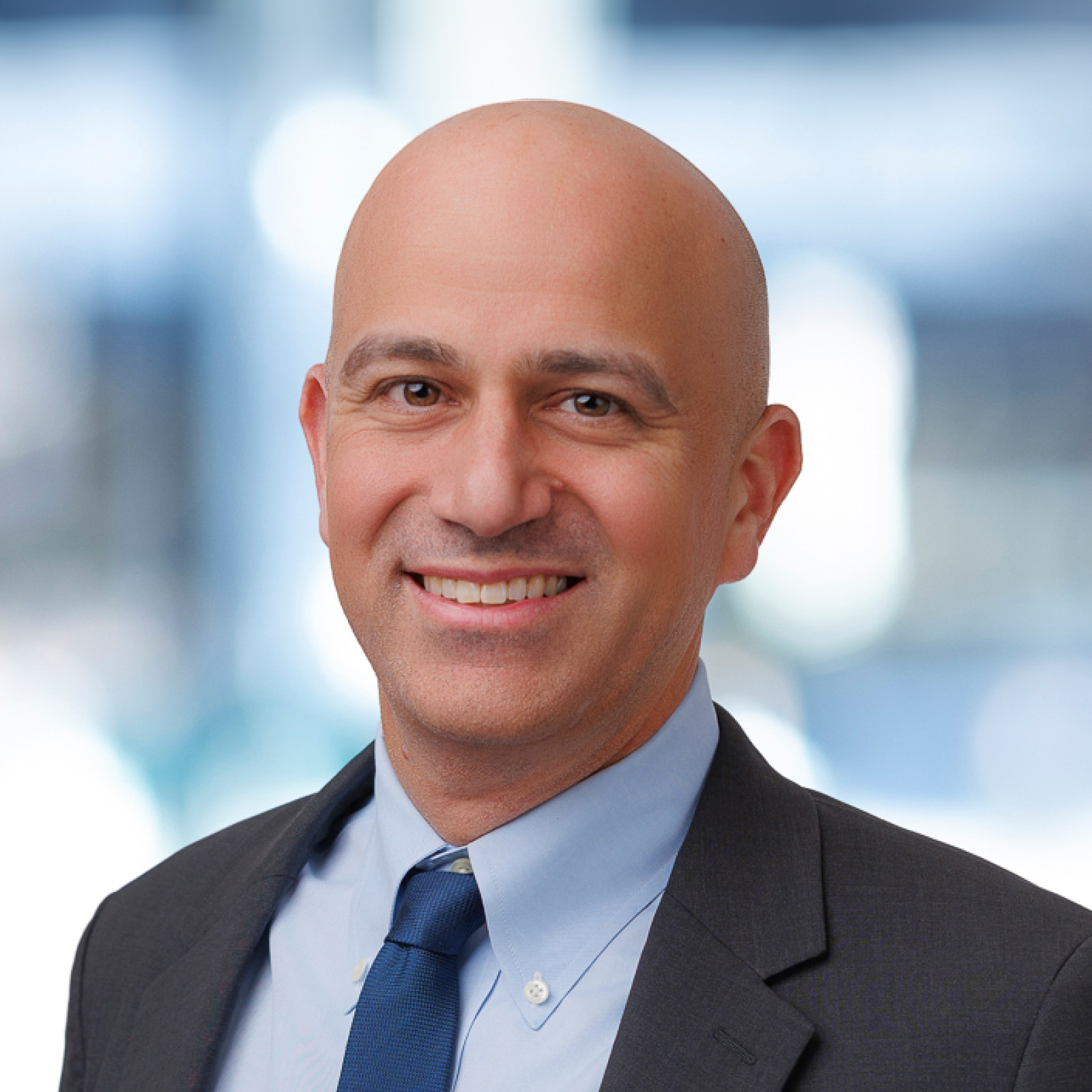
John Barkett is a managing director in BRG’s Healthcare Transactions and Strategy practice, where he counsels health plans, hospital systems, life sciences companies, and financial institutions, among others, on a range of issues related to transactions and public policy in the healthcare space.
Before joining BRG, Mr. Barkett served as the Senior Policy Advisor for Health Care Delivery System Reform on the White House Domestic Policy Council, where he covered drug pricing, Medicare Advantage and Part D, and payment reform. He also previously served on the faculty of the Bloomberg School of Public Health at Johns Hopkins University, where he was an assistant scientist and Health Policy Scholar.
Mr. Barkett was the senior director of Policy Affairs for a large benefits and actuarial consulting firm from 2012 to 2021. He worked for a Silicon Valley startup, the nation’s largest private Medicare exchange, before it was acquired by the consulting firm in 2012.

